
The History of Qabili Palaw: The Dish That Carries Afghanistan’s Heart
There are certain aromas that never leave us, no matter how many years pass or how far from home we travel.
For me, one of those memories begins in my grandmother’s kitchen on a busy Friday morning. Long before guests arrived, the house would already be alive with anticipation. I remember stepping through the doorway and being greeted by the warm scent of cardamom drifting through the air. Steam clouded the kitchen windows. Somewhere in the corner, carrots slowly caramelized until they turned a deep golden color, while raisins glistened like little jewels waiting for their place atop a mountain of rice.
My grandmother moved through the kitchen with quiet confidence. She barely needed recipes. Every motion seemed guided by memory and tradition. The large Deg sat on the stove, its lid rattling gently as fragrant steam escaped. From another room came the sound of relatives arriving, children laughing, and cups of tea being poured.
Everyone knew what was being prepared.
Qabili Palaw.
The meal that meant something important was happening.
The meal that brought people together.
The meal that felt like home.
The Dish That Represents a Nation
Every country has a dish that tells its story.
For Afghanistan, that dish is Qabili Palaw.
It is more than a beloved meal. It is a symbol of hospitality, celebration, and identity. Across cities, villages, and generations, Qabili Palaw has earned its place as Afghanistan’s national dish because it reflects many of the values that Afghan families hold dear: generosity, patience, craftsmanship, and respect for guests.
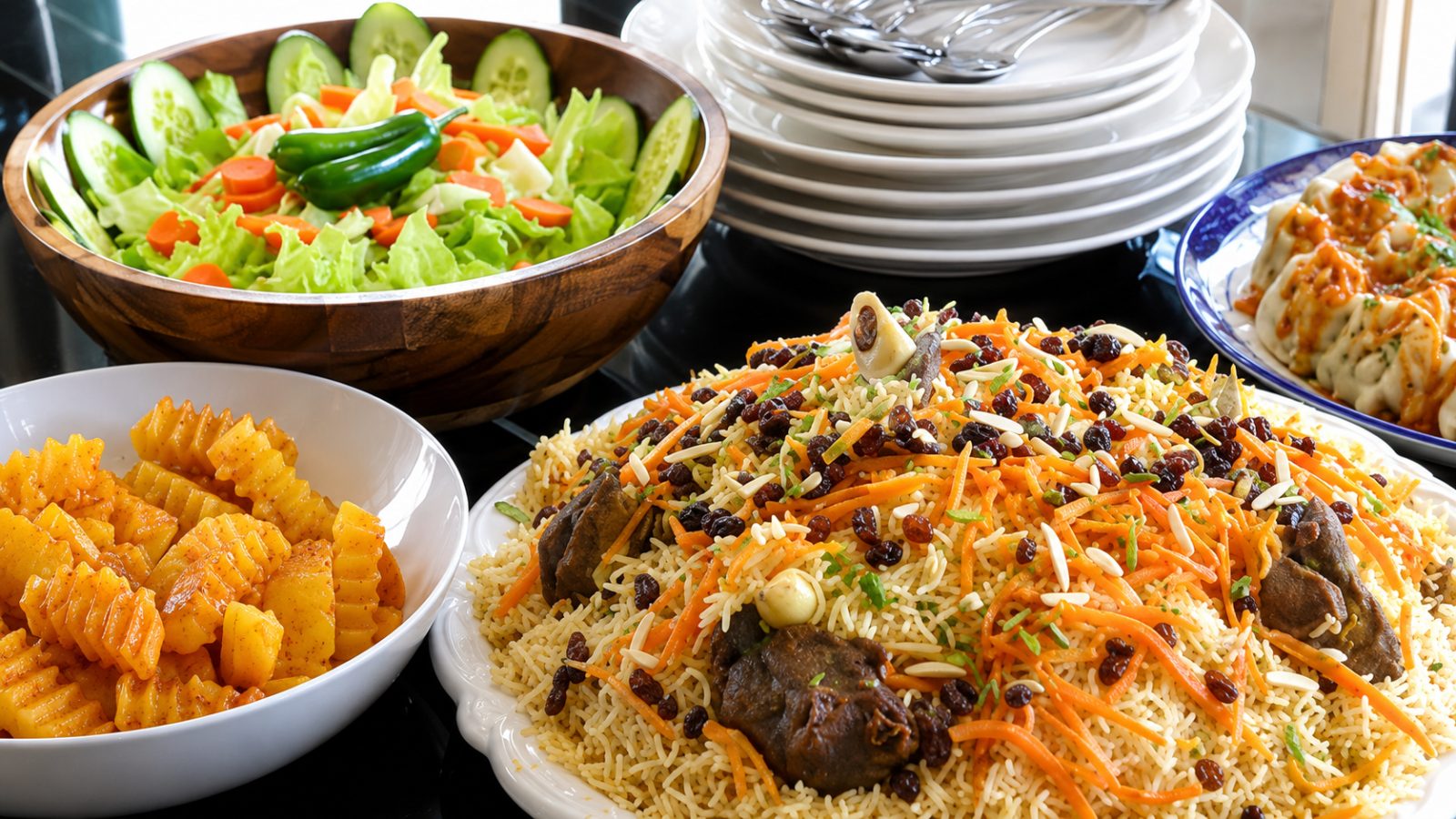
At Afghan weddings, enormous trays of Qabili Palaw often become the centerpiece of the celebration. During Eid gatherings, families prepare it to share with relatives and neighbors. On Fridays, when loved ones gather after a busy week, the aroma of rice and spices frequently fills homes across the country.
The dish appears during life's most meaningful moments.
Birth celebrations.
Engagements.
Family reunions.
Religious holidays.
And even quiet evenings when grandparents want to pass traditions on to younger generations.
For Afghans living abroad, Qabili Palaw often carries an even deeper meaning. A single spoonful can transport someone back to childhood memories, family gatherings, and streets they may not have seen in years.
Food has a remarkable ability to preserve identity.
And few dishes do that as beautifully as Qabili Palaw.
The Origins of Qabili Palaw
The story of Qabili Palaw is closely connected to Afghanistan's place in history.
For centuries, Afghanistan stood at the crossroads of civilizations. Ancient trade routes carried merchants, travelers, scholars, and explorers through the region. Along these routes came not only goods but also ideas, traditions, and ingredients that gradually became part of Afghan cuisine.
Rice traveled across Asia.
Spices arrived from distant lands.
Carrots, raisins, cumin, and cardamom found their way into local kitchens.
Over time, Afghan cooks transformed these ingredients into something uniquely their own.
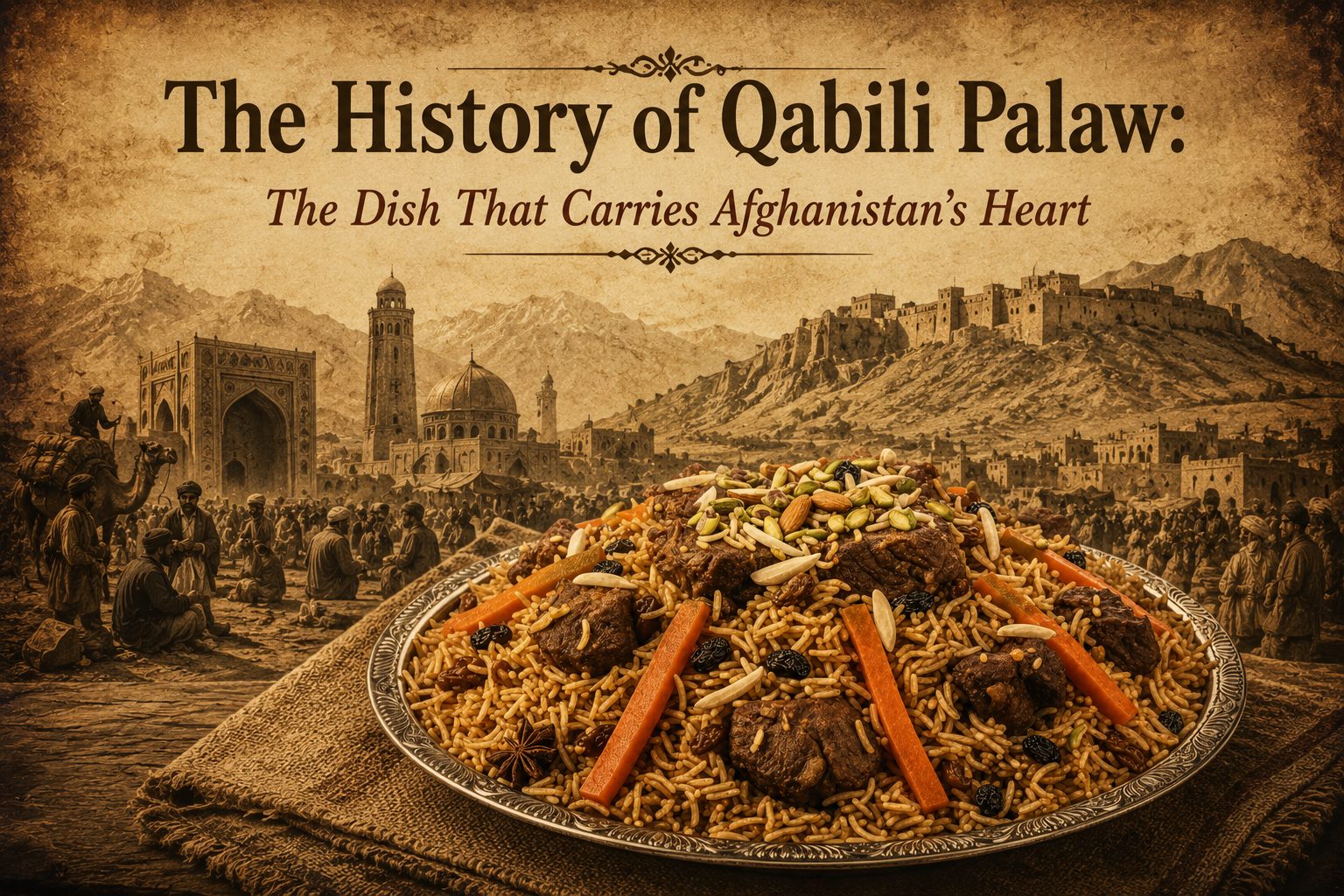
Like many traditional foods, the exact origins of Qabili Palaw remain surrounded by stories rather than certainty. One popular tale suggests that the dish became associated with wealth and honor because of the precious ingredients used to prepare it. Sweet raisins, fragrant spices, and carefully cooked rice were once considered luxuries that demonstrated respect for honored guests.
Another story suggests that the dish evolved gradually along caravan routes where traders exchanged culinary influences as naturally as they exchanged goods.
Whatever its precise beginnings, one truth remains clear.
Generations of Afghan families refined Qabili Palaw into the masterpiece known today.
Each family added its own touch.
Each region developed subtle variations.
Each grandmother guarded a few treasured secrets.
And through all those changes, the soul of the dish remained unchanged.
The Meaning Behind the Ingredients
One reason Qabili Palaw feels so memorable is that every ingredient seems to tell a story.
Rice forms the foundation.
In many cultures, rice symbolizes abundance, prosperity, and blessing. When a large platter of perfectly cooked rice is placed at the center of the table, it represents a wish that everyone present will enjoy a life filled with nourishment and plenty.
Then come the carrots.
Their golden color catches the eye immediately. They bring a gentle sweetness that balances the savory richness beneath them.
The raisins add another layer of contrast.
Soft and sweet, they remind us that Afghan cuisine often embraces harmony rather than extremes. Sweetness and savoriness coexist beautifully, creating a flavor that feels complete.
Lamb, often used in traditional preparations, reflects generosity and hospitality. Serving a rich meat dish has long been a way of honoring guests and expressing gratitude for their presence.
And then there are the spices.
Cardamom.
Cumin.
Other fragrant seasonings passed from generation to generation.
Together, they create an aroma that is almost impossible to forget.
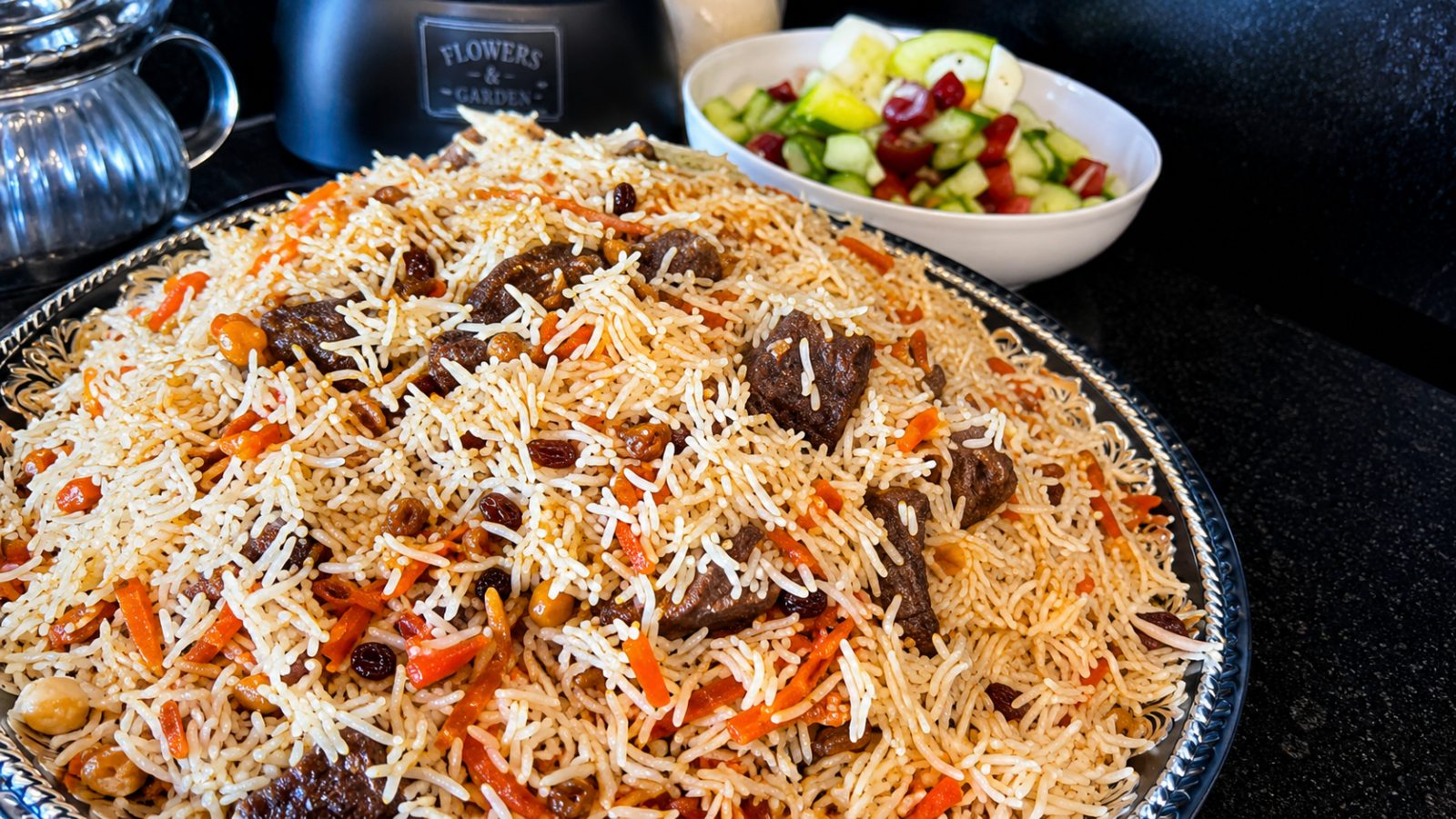
Lift the lid from a freshly prepared Deg, and a cloud of fragrant steam rises into the air. The scent fills the room before anyone even takes a bite. Golden carrots shine against snowy rice. Raisins glimmer across the surface.
The dish engages every sense.
Perhaps that is why its memories last so long.
The Traditional Afghan Deg
Every memorable dish has a story.
But every memorable dish also has a vessel.
For generations, Afghan families have prepared Qabili Palaw in a Deg.
The shape of the traditional Afghan Deg is familiar to almost anyone who grew up around Afghan cooking. Its design helps distribute heat evenly and gives rice the space it needs to cook properly. Over time, the Deg became more than cookware. It became part of family traditions.
My grandmother's Deg held countless stories.
It prepared meals for weddings, holidays, and family gatherings that stretched late into the night. Its surface carried the marks of years spent serving generations of loved ones.
Today, many Afghan families continue that tradition while embracing modern conveniences.
That is one reason I appreciate the Rayhana Qabili Pilaf Pot.
Its shape feels immediately familiar, inspired by the traditional Afghan Deg that has been present in kitchens for generations. At the same time, it brings features that make modern cooking easier without sacrificing tradition.
My grandmother would have loved how easily rice releases from the non-stick European coating. Anyone who has spent hours carefully preparing Qabili Palaw knows how disappointing it can be when rice sticks or burns. The smooth surface helps preserve the beauty of every serving while making cleanup remarkably simple.
The generous 7.4-quart capacity feels perfectly suited for the gatherings that define Afghan hospitality. Whether preparing a family dinner or celebrating a special occasion, there is room for everyone at the table.
I also appreciate the thoughtful details. The pot is SGS certified and free from lead, cadmium, and phthalates, offering peace of mind for families. It works on virtually all cooktops, and it is oven-safe as well. The included non-stick ladle and one-year warranty add practical touches that busy home cooks value.
Most importantly, though, the pot feels connected to tradition.
Its silhouette looks as though it belongs in the kitchens where Qabili Palaw has been lovingly prepared for generations.
Qabili Palaw Around the World
Today, Afghanistan's national dish travels far beyond Afghanistan's borders.
In homes across America, Canada, Europe, Australia, and countless other places, Afghan families continue gathering around platters of Qabili Palaw.
Children born thousands of miles from Kabul, Herat, Mazar-e-Sharif, or Kandahar often learn about their heritage through food long before they understand history books.
A mother explains why raisins belong on top of the rice.
A father shares memories of family celebrations from decades ago.
A grandmother teaches the importance of patience while preparing a special meal.
These lessons are about much more than cooking.
They are lessons about identity.
Culture.
Family.
Belonging.
For immigrant families, recipes become bridges between generations. They help preserve language, stories, and traditions that might otherwise fade with time.
The aroma of cardamom rising from a pot on a winter evening in Toronto, Sydney, London, or California can create an instant connection to memories thousands of miles away.
Food becomes a passport to home.
And Qabili Palaw remains one of the most cherished journeys.
More Than Food
The older I become, the more I realize that Qabili Palaw is not really about rice, raisins, carrots, or spices.
It is about people.
It is about the aunt who wakes before sunrise to prepare a family feast.
The grandfather who tells stories while everyone waits for dinner.
The cousins laughing around the table.
The guests who are welcomed with generosity.
The memories that linger long after the meal is finished.
Every family has its own version.
Every gathering creates a new story.
And every generation leaves its fingerprints on the tradition.
When we prepare Qabili Palaw, we are not simply making dinner.
We are preserving a piece of cultural memory.
We are honoring those who came before us.
And we are sharing something meaningful with those who come after us.
That is a remarkable gift for any meal to carry.
Closing Reflection
Whenever I think about Qabili Palaw, I remember that kitchen from my childhood.
The scent of cardamom floating through the house.
The steam escaping when the lid was lifted.
The golden carrots shining on top of the rice.
The sound of family members gathering together before a shared meal.
Those moments remind me that food is never just food.
It is memory.
It is tradition.
It is love passed from one generation to the next.
And few dishes carry those emotions as beautifully as Qabili Palaw.
What memory comes to mind when you think about Qabili Palaw?
I'd love to hear your family stories, traditions, and special memories in the comments below.
And if you'd like to cook or serve Qabili Palaw in a pot inspired by traditional Afghan Degs, you can find the tradatinal Qabili Pilaf Pot here:
Loading...