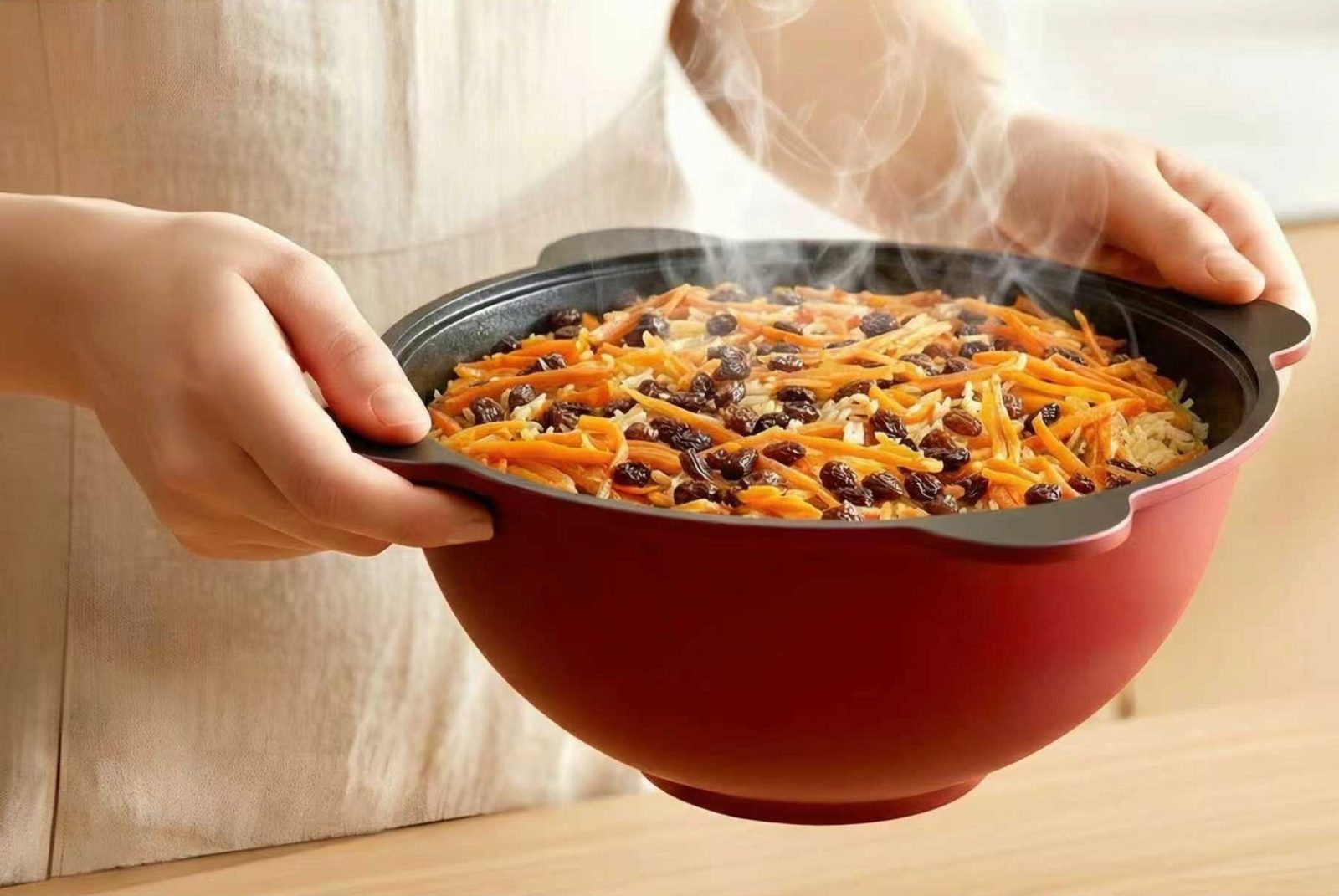
If you have ever made Qabili Pilaf at home, you have probably noticed that the same recipe does not always produce exactly the same result. Sometimes the rice turns out fluffy, with the grains staying separate. Another time, the bottom layer may become too browned while the upper layers still need more time to steam.
Of course, the pot is not always the reason. The type of rice, amount of water, cooking time, amount of oil, and heat level all have an effect. However, the pot itself can also change the cooking process, especially when you are preparing Qabili Pilaf for several people or making a large batch.
The material of the pot, its thickness, the type of interior coating, its size, and even its shape are all things worth considering when choosing a pot.
In this article, we will compare different types of pots commonly used for cooking Qabili Pilaf and then look at how a pot specifically designed for Qabili Pilaf, such as the Rayhana Qabili Pilaf Pot, differs from an ordinary cooking pot.
Why Does Choosing the Right Pot Matter for Cooking Qabili Pilaf?
Qabili Pilaf usually involves more than one stage of cooking. The rice is prepared, different ingredients are added, and the dish is then left to steam for a period of time.
At this stage, heat distribution becomes important. If the bottom of the pot heats up too quickly, the lower part of the rice may receive more heat than the rest. When heat is distributed more evenly, it can be easier to control the steaming stage.
The shape of the pot also matters. Qabili Pilaf is often prepared in a relatively large quantity and needs enough space for the rice and accompanying ingredients. A pot that is too small can make the rice overly compact, while a very large pot is not always the best choice for a small amount of food.
There is also the issue of food sticking to the bottom of the pot. Removing a large amount of rice from a pot where the bottom has become heavily stuck can be frustrating, especially after preparing food for a gathering.
Types of Pots for Cooking Qabili Pilaf
There are many different types of pots available for cooking rice. Their differences are not limited to appearance; the material of the body and the interior coating can also affect how the pot is used and maintained.
Aluminum Pots for Qabili Pilaf
Aluminum is widely used in cookware because of its relatively low weight and good heat conductivity.
An aluminum pot can be a practical option for people who cook large quantities of rice. It is generally lighter than a similar cast iron pot and heats up relatively quickly.
However, not all aluminum pots perform the same way. The thickness of the body and base matters. In a thin pot, direct heat may become concentrated at the bottom, making the cooking process more difficult to control.
The interior coating is another factor to consider. Aluminum itself is not naturally nonstick, so if the pot does not have a suitable coating, rice is more likely to stick to the bottom.
Stainless Steel Pots for Qabili Pilaf
Stainless steel is known for its durability and good resistance to scratches. For someone looking for a pot that can last for many years, this can be an important advantage.
However, the heat performance of a stainless steel pot depends on its construction. Some stainless steel cookware has a multi-layer base designed to distribute heat more effectively.
For Qabili Pilaf, the possibility of rice sticking to the bottom is another consideration. If the temperature and amount of oil are not controlled properly, the rice may stick to the bottom and require more effort to clean.
Therefore, when choosing a stainless steel pot, simply looking for the word "stainless steel" is not enough. The construction of the base and the overall quality of the pot should also be considered.
Cast Iron Pots for Qabili Pilaf
Cast iron retains heat for a relatively long time. This characteristic makes it useful for dishes that require slower cooking.
Its obvious drawback is its weight. A large cast iron pot, especially when it is filled with rice and meat, can be heavy. Moving it from the stove to the dining table may also be difficult for some people.
Depending on the type of cast iron and its coating, the maintenance and cleaning requirements can also vary.
Nonstick Pots for Qabili Pilaf
For many people who cook Qabili Pilaf at home, a nonstick pot offers a simple and practical advantage: food is easier to release from the bottom of the pot.
This matters not only when serving the food. Cleaning a pot with a large amount of rice stuck to the bottom can take considerable time.
However, being "nonstick" does not mean that the pot requires no care. Using unsuitable metal utensils or scratching the coating can shorten its lifespan. The quality of the coating and the way the pot is used are both important.
Copper Pots for Qabili Pilaf
Copper has high thermal conductivity and is therefore used in certain types of cookware.
However, a copper pot may not be the right choice for everyone as an everyday cooking pot. Its price, weight, and greater maintenance requirements are factors worth considering.
The quality of the interior layer is also important in copper cookware because the inner surface needs to be suitable for contact with food.
Comparing Different Pots for Cooking Qabili Pilaf
For a simpler comparison, the main characteristics of each type of pot can be viewed together:
Pot Type | Heat Distribution | Rice Sticking | Weight | Durability | Ease of Cleaning |
|---|---|---|---|---|---|
Aluminum | Good, depending on thickness | Depends on coating | Usually light | Good | Moderate |
Stainless steel | Depends on base construction | May be more likely | Medium | High | Good |
Cast iron | High heat retention | Depends on coating | Heavy | High | Depends on coating |
Nonstick | Depends on the body | Less likely | Medium | Depends on coating | Easy |
Copper | Very good | Depends on interior coating | Medium to heavy | Good | Requires more care |
This table should not be considered a definitive ranking. For example, a thick aluminum pot may perform better in terms of heat distribution than a thin stainless steel pot.
Therefore, when choosing a pot, it is better to look at the complete set of specifications rather than focusing only on the material used to make it.
Is a Nonstick Pot Better Than a Traditional Pot for Qabili Pilaf?
The answer largely depends on your cooking habits.
If you have been cooking with a traditional pot for years and consistently get the results you want, there may be no reason to replace it. Cooking with a familiar pot is an advantage in itself because you have already learned how much heat, cooking time, and oil to use with that particular pot.
A nonstick pot, however, offers a different experience for people who value convenience and easier cleaning.
With a quality nonstick pot, rice can be easier to remove from the bottom. This is particularly useful when serving Qabili Pilaf, especially when you have prepared a large amount of food.
At the same time, a nonstick coating requires proper care. Using suitable utensils and following the recommended cleaning instructions can help maintain it.
So rather than simply choosing between a traditional and a nonstick pot, it is better to consider your cooking habits, frequency of use, and priorities.
What Should You Consider When Choosing a Qabili Pilaf Pot?
Pot Capacity
First, consider how many people you usually cook Qabili Pilaf for.
If you mostly cook for a small family, you probably do not need a very large pot. On the other hand, if you regularly cook for guests or a larger family, greater capacity becomes more important.
The important point is not to look only at the stated capacity. The interior space and shape of the pot also affect how much food you can comfortably prepare in it.
Body Material
The material of the body affects the weight, heat distribution, and maintenance requirements of the pot.
Aluminum is lightweight and conducts heat well. Stainless steel offers high durability. Cast iron retains heat for longer, while copper has high thermal conductivity.
However, the body material alone does not determine which pot is right for you.
Interior Coating
If you are buying a nonstick pot, the interior coating is one of its most important specifications.
It is worth learning about the type of coating, cleaning method, and utensils recommended for use with it. A properly used nonstick pot can make both cooking and cleaning easier.
Shape and Depth
Qabili Pilaf is a dish that is often prepared in a relatively large quantity. Therefore, the shape of the pot should provide enough room for the rice and accompanying ingredients.
A suitable curved design and adequate interior space can make cooking, stirring, and serving easier.
Stove Compatibility
If you have a gas stove, you generally have more cookware options. However, if you use a ceramic, halogen, or induction cooktop, you should check the pot's compatibility.
This is particularly important for people who use induction cooktops because not every aluminum pot can be used directly on an induction surface.
Oven Use
If you plan to put the pot in the oven, check its maximum temperature rating.
This information is normally provided in the product specifications and should not be guessed simply based on the appearance or material of the pot.
Cleaning Method
Easy cleaning is important for cookware that is used regularly.
If a pot is dishwasher safe, cleaning can be more convenient. However, for some nonstick cookware, hand washing may help extend the life of the coating.
How Is the Rayhana Qabili Pilaf Pot Different from Ordinary Pots?
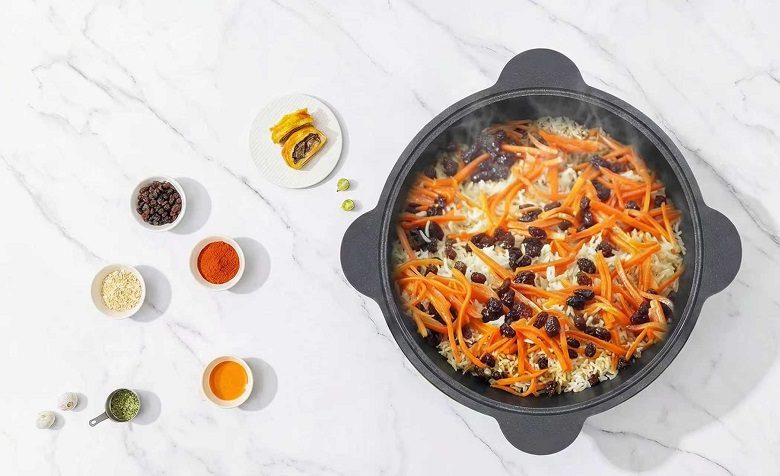
The Rayhana Qabili Pilaf Pot is designed around the idea of combining the appearance and form of a traditional Qabili Pilaf pot with features expected from modern cookware.
The body is made from pure, virgin cast aluminum, while the interior uses a high-quality multi-layer European nonstick coating.
This combination brings two important characteristics together in one pot: heat distribution through the aluminum body and the convenience of a nonstick cooking surface.
Pure, Virgin Cast Aluminum: A Body Designed for Even Cooking
The body of the Rayhana pot is made from pure, virgin cast aluminum.
Its classic, curved design is intended to help distribute heat evenly when cooking Qabili Pilaf and other rice dishes.
In practice, this means the pot is not simply designed to hold rice over a heat source; its shape is also part of the cooking experience.
Of course, the final result still depends on the amount of water, type of rice, heat level, and steaming time. No cookware can replace these factors.
Multi-Layer European Nonstick Coating
The inside of the Rayhana pot features a high-quality multi-layer European nonstick coating.
The benefit of this coating is particularly practical when cooking Qabili Pilaf. When food is less likely to stick to the bottom, serving becomes easier and cleaning the pot requires less effort.
Proper care is still important to maintain the coating. Even a high-quality coating can be damaged through improper use.
SGS Testing and Safety Standards
One of the important specifications of Rayhana is independent testing by the SGS laboratory.
According to the product specifications, the pot has been tested for lead, cadmium, and phthalates and is certified as free from these substances. The specifications also state compliance with California Proposition 65 and FDA 21 CFR.
This type of information can be important when purchasing cookware because consumers want to know whether the surface they use for cooking has been tested with regard to relevant safety considerations.
Compatible with Different Types of Stoves
One practical advantage of this pot is its compatibility with several types of cooktops.
The Rayhana Qabili Pilaf Pot is designed for use on:
Gas stoves
Ceramic cooktops
Halogen cooktops
Induction cooktops with an adapter
If you have an induction cooktop, note that an adapter is required to use this pot on it.
This is something worth checking before purchasing so that the pot is compatible with your kitchen's cooking system.
Oven Safe
The pot can be used in the oven at temperatures up to 356°F.
This feature can be useful if you want to complete part of the cooking process in the oven. However, before using it in the oven, you should also follow the product instructions and consider any limitations related to the lid or other components.
Easier Cleaning
The Rayhana pot is dishwasher safe.
However, hand washing is recommended to help extend the product's lifespan. This is particularly relevant for cookware with a nonstick coating because the way it is cleaned can affect the longevity of the coating.
In other words, you can use a dishwasher, but if you want to take extra care of the pot, hand washing is the better option.
What Comes with the Rayhana Pot?
The product includes a Qabili Pilaf pot with a lid and a free nonstick ladle.
Having a ladle included with the pot is a small but practical detail, especially if you are purchasing the product as a complete set for cooking and serving Qabili Pilaf.
One-Year Warranty
Rayhana provides a one-year warranty for this product.
A warranty alone is not enough reason to choose a particular piece of cookware, but when comparing similar products, it is one of the factors worth considering.
Which Pot Is Suitable for Cooking Qabili Pilaf?
Put simply, the right choice depends on what you expect from the pot.
If you want something lightweight and simple, aluminum can be a practical choice.
If durability and resistance to scratches are your priorities, stainless steel is worth considering.
If heat retention is important to you and you do not mind the extra weight, cast iron is another option.
If convenience during cooking, easy food release, and simple cleaning matter more to you, a quality nonstick pot may be more practical.
However, if you are looking for a pot specifically designed with the form of a Qabili Pilaf pot in mind, while also offering features such as a high-quality multi-layer European nonstick coating, compatibility with different cooktops, oven use, and dishwasher-safe cleaning, the Rayhana Qabili Pilaf Pot is an option worth considering and comparing with your needs.
Frequently Asked Questions About Qabili Pilaf Pots
What is the best material for a Qabili Pilaf pot?
There is no single answer for everyone. Aluminum, stainless steel, cast iron, copper, and nonstick cookware all have different characteristics. The right choice depends on your cooking method, the number of people you cook for, and your kitchen setup.
Is a nonstick pot suitable for cooking Qabili Pilaf?
Yes. A nonstick pot can be suitable for Qabili Pilaf, particularly if easy food release and convenient cleaning are important to you. However, the interior coating should be cared for according to the manufacturer's instructions.
What is the Rayhana Qabili Pilaf Pot made of?
The body of the Rayhana Qabili Pilaf Pot is made from pure, virgin cast aluminum, with a high-quality multi-layer European nonstick coating on the interior.
Is the Rayhana pot suitable for induction cooktops?
Yes, but an adapter is required for use on an induction cooktop. The pot can also be used on gas, ceramic, and halogen cooktops.
Can the Rayhana pot be used in the oven?
Yes. The product can be used in the oven at temperatures up to 356°F. Before using it, it is recommended to also check the instructions regarding the different components of the product.
Is the Rayhana pot dishwasher safe?
Yes. The product is dishwasher safe. However, hand washing is recommended to help extend its lifespan.
Does the Rayhana Qabili Pilaf Pot come with a ladle?
Yes. A free nonstick ladle is included with the product.
How long is the warranty on the Rayhana Qabili Pilaf Pot?
The product comes with a one-year warranty.
Conclusion
For cooking Qabili Pilaf, a pot is more than simply a container that holds food over a heat source. The body material, shape, interior coating, size, and cooktop compatibility can all affect the cooking experience.
Aluminum pots are lightweight and conduct heat well. Stainless steel offers durability. Cast iron retains heat effectively, while nonstick cookware makes food release and cleaning easier. The right choice depends on your cooking habits and priorities.
The Rayhana Qabili Pilaf Pot takes a somewhat different approach. Its body is made from pure, virgin cast aluminum and features a high-quality multi-layer European nonstick coating. Its classic, curved design is intended for cooking Qabili Pilaf and rice dishes.
The product has also been tested by SGS and, according to the provided specifications, is free from lead, cadmium, and phthalates. Its compatibility with gas, ceramic, and halogen cooktops, as well as induction cooktops with an adapter, its oven use up to 356°F, and its dishwasher-safe design make it suitable for a variety of kitchens.
Ultimately, choosing the right pot depends on what matters most to you: weight, durability, coating, ease of cleaning, capacity, or the way you prefer to cook. If Qabili Pilaf is a regular part of your cooking, comparing these factors can help you choose a pot that fits the way you actually use it.
Loading...